


Are you just starting on your trading journey, and want to know what’s better – trading stocks vs forex?
In this handy comparison guide, we look at the similarities and differences between forex trading vs stocks. We take a close look at the factors that differentiate these two types of trading.
Our comparison between day trading forex and stocks may help you understand which option is more suitable for your personal investment goals and preferences.
This may help you decide between these two very popular forms of trading.
Stocks vs forex – which is best to trade?
Here’s a brief overview of what trading forex and stocks consists of, before we get into comparisons between the two:
Forex Trading
- Forex trading involves the buying and selling of contracts based on the price movements of currency pairs in the foreign exchange market
- The forex market operates globally 24-hours a day, five days a week, providing ample opportunities for trading around the clock, almost seven days a week (due to global time zones)
- Currency exchange rate prices constantly fluctuate based on various factors like economic data, interest rates, and geopolitical events
- Traders can profit from both rising and falling currency prices by going long (buying) or short (selling) a currency pair
- Leverage is a key feature of forex trading, allowing traders to control larger positions with a relatively small amount of capital
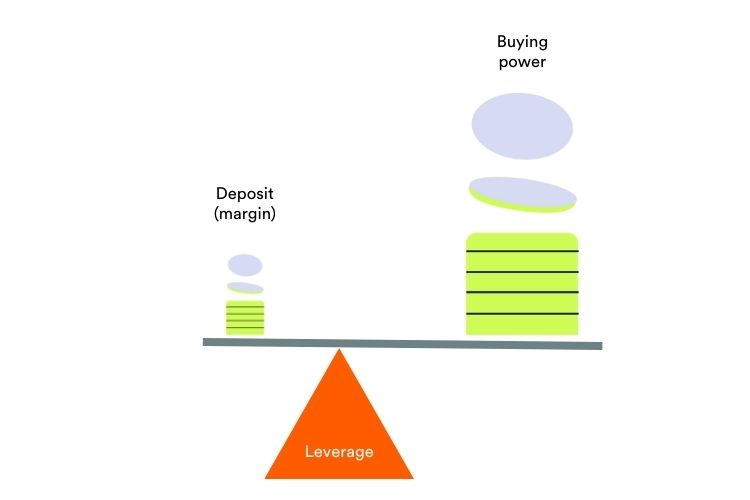

- Margin requirements in forex CFD trading are typically lower compared to stock CFDs, enabling traders to take larger positions with less initial capital
- A strategy some forex traders use is the carry trade. This involves borrowing money in a low-interest-rate currency and investing it in a high-interest-rate currency. The goal is to pocket the difference between the two interest rates. This strategy is not available to stock CFD traders.
Stock CFD Trading
- Stock CFD trading involves the buying and selling of contracts based on the price movements of shares in publicly listed companies
- Stock prices are influenced by a company’s financial performance, sector trends, and overall market sentiment
- Stock CFDs allow traders to speculate on the price movements of individual stocks without owning the underlying asset
- Companies pay dividends to their shareholders. This means that companies distribute a portion of their profits to shareholders on a regular basis (for example, quarterly, annually, etc.). Long-term share CFD traders can benefit from the income these dividends provide.
- Stock CFD markets only operate during specific trading hours, typically from Monday to Friday, following the trading hours of the underlying stock exchanges
- Using CFDs, stock traders are able to trade both long and short positions, potentially benefitting from both rising and falling share prices
- Although leverage is available in stock CFD trading, it is usually lower compared to forex, reflecting the lower volatility and higher capital requirements of stock trading
- Margin requirements in stock CFD trading are generally higher compared to forex, as stocks are considered less volatile and more stable assets
Similarities between forex and stock CFD trading
Ownership of the underlying asset:
Both forex and stock CFD trading involve contracts that derive their value from underlying assets. In forex, these assets are currency pairs, while in stock CFDs, they are individual company shares.
Contractual agreements:
Both forex and stock CFDs are contractual agreements between you and the broker. You don’t own the underlying asset itself, but speculate on its price movements.
Use of leverage potential:
Both markets can offer leverage, allowing you to control a larger position than your initial deposit. This magnifies potential profits and losses.
Short selling opportunities:
Both forex and stock CFDs allow you to profit from a decline in the price of the underlying asset, ie. currency or shares. This is done through short selling made available through CFDs.
Margin Requirements:
When using leverage, both forex and stock CFD trading requires a margin deposit, which is a percentage of the total position value.
Market analysis techniques:
Many technical analysis tools and indicators used in forex trading can also be applied to stock CFD trading. The type of trading charts used, and the indicators used, are the same for both forms of trading.
Differences between stock CFD trading and forex
Here are a few of the differences between the forex and stock CFD markets:
Liquidity:
Forex markets are the most liquid financial markets globally, with high trading volumes and tight spreads due to the vast number of participants.
This means you should not have any difficulty selling or buying a currency pair when you wish to do so.
However, forex liquidity does depend on whether you choose to trade the major currencies, or less-traded currency pairs known as ‘exotics,’ which may have lower liquidity than the most popular currency pairs.
Stock CFD markets may have lower liquidity compared to forex CFDs, particularly for less-traded stocks or during periods of low trading activity.
Some stocks have very low liquidity, meaning there may not be a seller or buyer available when you wish to open or close a position.
This may mean you either have to be patient and wait until those shares become available, or accept a less favourable price for the shares you wish to buy or sell to enter or exit your trade.
Market volatility:
Forex and stock CFDs have different volatility profiles. The forex market is renowned for its high volatility.
Therefore, forex tends to cater more to those who prefer a fast-paced market with potentially larger movements in price action.
Stock CFDs tend to be less volatile than forex, especially for the larger established companies with solid track records.
However, stocks can still exhibit periods of high volatility, particularly when major news announcements are made or company performance figures are released.
Stock CFDs might be a better choice for those seeking a potentially smoother trading experience, with a focus on single company fundamentals.
Financial accessibility:
Forex trading is easily accessible to retail traders, with a relatively low capital requirement.
Some forex brokers permit accounts to be opened with as little as $500, and offer leverage of 80% to 90% or more.
Stock CFD trading may require slightly higher capital investment, as the leverage on offer is lower than for forex trading.
Leverage of 20% to 60% is more common for stock CFDs, meaning you’re able to ‘borrow’ less from your broker and are required to put up more margin for your trades.
Market hours:
Forex markets operate 24/5, allowing traders to trade currencies at any time of the day or night, almost seven days a week, due to global time differences.
Stock CFD markets follow the trading hours of the underlying stock exchanges, typically from morning to afternoon only on weekdays.
Therefore, forex trading offers much more flexible trading opportunities, and the chance to trade outside of normal office hours.
The diagram below illustrates how the four main forex trading centres of the world overlap.

If you trade stock CFDs and wish to trade live, you’ll have to do so when your chosen stock market is open, giving you less flexibility.
Ease of learning to trade:
Here are some considerations:
- Both forex and stock CFD trading use leverage, so new traders will need to learn how leverage works and how to use it safely
- Stock CFDs are bought and sold using the currency of the stock exchange on which they are listed. Therefore, transactions are limited to two decimal places
- Forex CFD trading can be complex for beginners, due to the intricacies of currency pairs, exchange rates, and geopolitical factors
- Most forex trade prices go to four decimal places, other than those involving the Japanese Yen, which only go to two decimal places
- New forex traders also have to learn about pips, which is the smallest unit of price movement of a currency pair
- Forex traders also need to understand forex trading quantities, such as standard lots, mini, micro and nano lots, in addition to pips
- Stock CFD trading may be more straightforward for beginners, as it involves trading a number of shares chosen by the trader
- Stock CFD trading is usually based on the price movement of familiar companies and industries, so research about the individual company is usually more straightforward
- Forex trading may involve more research to understand factors that may affect currencies or countries about which the trader has no prior knowledge
Payment of dividends and carry trades:
Stock CFDs pay the trader any dividends due on a long trade. Dividend payments are not available to forex traders.
Conversely, a stockholder in a short position will have to pay the value of the dividend if that share is held on the company’s record day. (This is the date when the company identifies shareholders eligible to receive dividends.)
Carry trading strategies are not available to stock traders, only to forex traders.
For income-focused investors with a long-term horizon, dividends might be a more suitable option due to their potential for a steady income stream.
For experienced traders comfortable with higher risk and active management, carry trades could offer the potential for higher returns, but come with significant risks of currency depreciation and market volatility.
Is forex or stock trading more profitable?
Both forex and stock trading offer similar potential for significant profits and losses, but the outcome for an individual trader depends on a wide variety of factors, such as:
- the trading strategy used
- trader experience
- risk management
- market conditions
Forex trading potentially offers higher profit potential due to higher leverage and volatility.
However, there are no statistics available to say either form of trading is more profitable overall for retail traders.
The correlation between the forex and stock markets
There is often a correlation between the forex and stock markets, with changes in one market influencing the other.
For example, economic indicators, geopolitical events, and central bank policies can impact both currency and stock prices.
Which is better: forex or stock trading?
Both forex and stock trading have their pros and cons, and the choice between the two depends on a variety of factors such as:
- your risk tolerance
- your investment objectives
- the time you have available to trade
- your personal trading preferences
While forex trading offers high liquidity and flexibility, stock trading provides opportunities for long-term investment and capital appreciation.
However, the process of learning to trade is the same, no matter whether you choose to trade forex or CFDs including indices and gold.
This is the basic process you’ll need to follow if you wish to start trading:

Ultimately, successful trading in either market requires knowledge, experience, and disciplined risk management.
However, which type of financial product you trade is really a matter of personal preference and lifestyle considerations.
Till next time, happy trading!

If you like this article then sign-up for our newsletter or join over 42,000 traders and get The Advanced Forex Course for Smart Traders 2.0. It’s 100% free.
Sources
Marketmates uses only high-quality sources, including peer-reviewed studies, to support the facts within our articles. Read our editorial guidelines to learn more about how we fact-check and keep our content accurate, reliable, and trustworthy.
- Moneysmart – Australian Government website giving financial advice. https://moneysmart.gov.au/investment-warnings/contracts-for-difference-cfds


