


In 2009 I completed my Master’s Thesis where I studied everything I could find about the world’s greatest traders.
What I learnt from this study formed the basis for my approach to trading (to this day).
This is what I will teach you in this course.


Results from a study into why top traders succeed
In this study, I found great traders have three things in common above all else:
- they favour emotional intelligence over intellectual intelligence
- they are disciplined and confident when they trade
- they use a ‘rules-based’ approach to trading
The first two traits are about trading psychology, and the final trait is about preparation and planning.
Let’s explore these in more detail.
Emotional intelligence is more important than mathematical intelligence
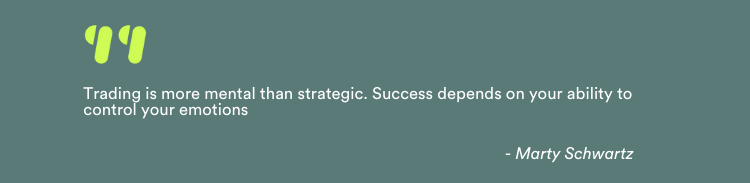
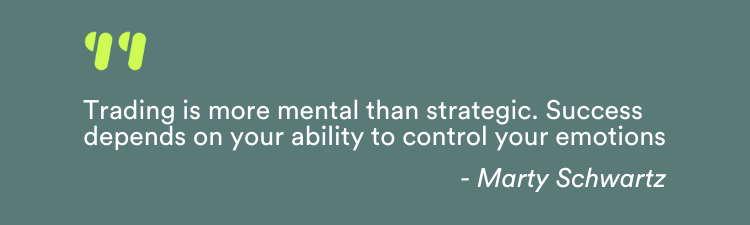
There’s a perception that top traders are number whizzes. But that is far from the truth.
While traders need to understand some basic probabilities – after all, trading is ultimately a statistical game – the more important thing to possess for successful trading is emotional intelligence (EQ).
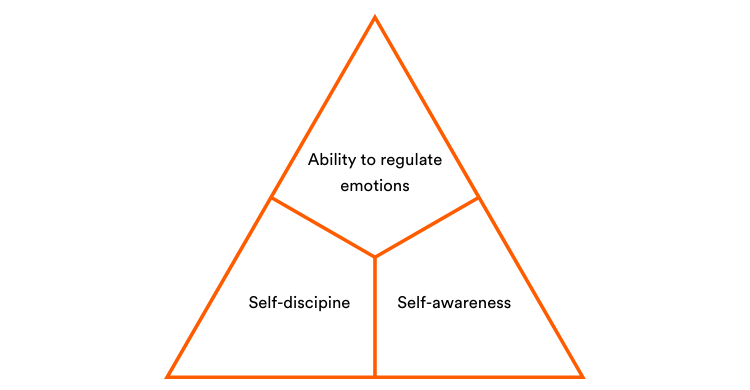
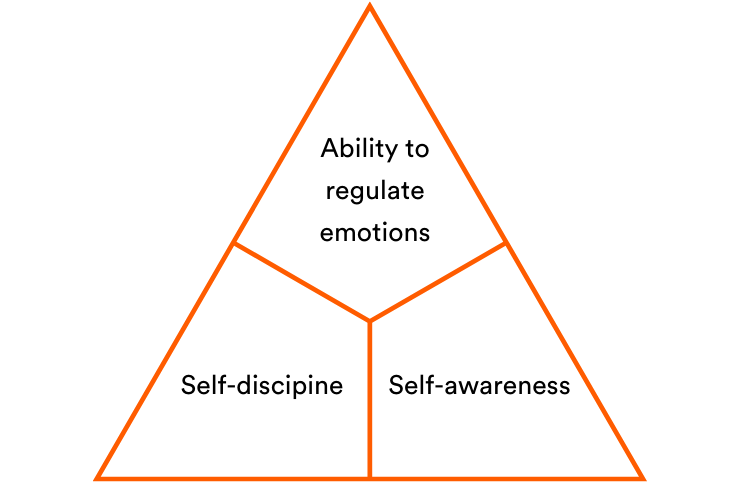
Emotional intelligence includes factors such as:
- self-awareness
- self-discipline
- the ability to regulate emotions
The better you are at controlling your emotions in the market, the more successful you will be.
If you are trading for the thrill of it, then you are unlikely to be consistent over the long term.
However, if you are self-aware about your strengths and weaknesses, and have the discipline to stick to your trading plan, then I believe you are following the correct path.
Confidence breeds discipline


A second finding from my study was that you need to be confident in your approach to the markets.
When you are confident and trust in your trading system, then you will remain disciplined in following your plan.
Market Wizard Marty Schwartz, the author of ‘Pitbull: Lessons from Wall Street’s Champion Day Trader,’ said:
“Confidence is essential to a successful trader.’
The reason is that top traders need to be masters not at winning, but losing.
Top traders realise that, despite their best efforts, any individual trade can be a losing one.
What matters is the ‘expectancy’ of their trading system over time, ie. they may lose on several trades, but overall the profits on their winning trades far outweigh their losses.
A recipe for failure repeated over and over again by inexperienced traders is either believing they are right, and not cutting their losses, or panicking after a series of losses, and breaking their rules.
Thus, to be a successful trader you must:
- remain confident in the long-term performance of your trading system
- be disciplined in the day-to-day application of your trading plan
This is true of all winning traders.
A ‘rules-based’ approach to trading

The third finding from my study is that the greatest traders follow a ‘rules-based’ approach to trading.
While you may think that top traders can somehow magically read the market, and accurately pick the direction, this is not true.
Yes, experience matters, and the more time you get to spend trading the markets, the better you will be able to read them.
But this is not enough.
I found that top traders spent a great deal of time researching how the markets work, so they can develop a set of rules, or operating system, to guide their trading.
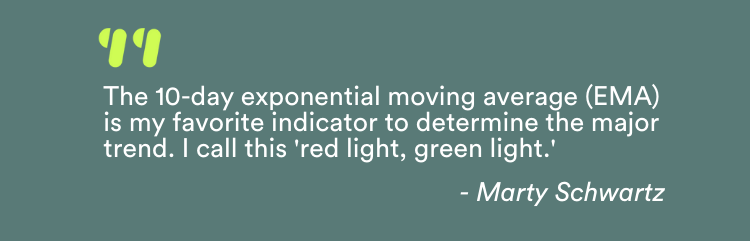
This is true of traders like Marty Schwartz, who would never trade on the wrong side of his 10-day moving average.
Or Ray Dalio (founder of arguably the world’s most successful hedge fund,) who views the economy ‘like a machine’ that he can model and trade.
Legendary trading coach Dr Van Tharp (from whom I borrowed the term ‘rules-based’) extended this concept even further.
The idea is to create a set of objectives first, followed by rules on how to achieve your objectives.
These rules include:
- How much to trade (position-sizing)
- How to identify the best conditions for trading
- When to enter your trade
- How to manage your risk
- When to exit profitable trades
- When to scale in and out of your trades
A rules-based plan ensures your actions are guided by a clear decision-making process. This helps you to stay disciplined and achieve consistent results.
An alternative beginning
The first version of this course had a different beginning. In the first two lessons, there was a heavy focus on trading psychology.
This proved controversial with some traders who were put off by the philosophical nature of the lessons.
What I’ve done in this version of the course is pretty quickly get into the system development process. The latter part of the course goes into detail on the psychological aspects.
In saying this, many traders said they liked the first lessons and would come back and revisit them later.
For example, one trader said:
“Even the ‘boring, preliminary stuff’ in the early modules (which I initially approached with a relatively impatient and dismissive attitude) is actually quite interesting and important.” – Peter
Personally, I think the lessons are important as they are about beliefs. An argument can be made that you trade your beliefs, so it’s important to be aware of what your beliefs are compared to those of the top traders I studied.
I have included versions of the original lessons here if you are game-enough!
Lessons to take to heart
As you can see from the findings in this study, success in the markets comes down to your trading psychology and having a rules-based plan to follow.
By the end of this course, you will have your own set of objectives and rules that you can use to trade successfully in the markets.
You will also have learnt how to master your trading psychology by learning how great traders think, and how to get ‘in the zone’ when trading.
This starts in the next lesson, where you will learn core trading concepts including what it takes to get an edge in the markets.
Lesson #2 Mastering Statistics and Probabilities for Traders
Until next time,

Sources
Marketmates uses only high-quality sources, including peer-reviewed studies, to support the facts within our articles. Read our editorial guidelines to learn more about how we fact-check and keep our content accurate, reliable, and trustworthy.
- Jack D. Schwager – Market Wizards: Interviews with Top Traders https://www.amazon.com/Market-Wizards-Interviews with Top Traders/
- Dr K. Van Tharp – Trade your Way to Financial Freedom https://www.amazon.com/Trade-Your-Way-Financial-Freedom
- Marty Schwartz – Pit Bull: Lessons from Wall Street’s Champion Day Trader https://www.amazon.com/Pit-Bull-Lessons-Streets-Champion/


