Fact checked

At MarketMates, we are committed to providing accurate information. Our content undergoes a rigorous process of fact-checking before it is published. Learn more about our editorial policy.
Last updated on July 1st, 2025
  Written by 
MarketMates Editorial Team
The MarketMates editorial team is led by ceo and co-founder Sam Eder, and consists of internal and external trading experts.
Our authors
  Reviewed by 
Sam Eder

Reviewer

Sam Eder
Sam is the cofounder and CEO of MarketMates. He has worked for brokers since 2008 and is the author of the Amazon best-seller 'The Consistent Trader.' His 'Advanced Forex Course for Smart Traders' has over 45,000 students.
Our authors

Risk Management in Forex Trading

Find out all about forex trading risk management and how to protect yourself in the financial markets

5 ChatGPT Prompts to Help You Pass Any Prop Firm Challenge

Build a rules-based plan in minutes using AI.

In this article

Secure Broker-backed Funding for Traders.

Try simple, flexible ‘balance-based’ challenges. 

MarketMates Logo

The MarketMates promise

At MarketMates, we are committed to providing accurate information. Our content undergoes a rigorous process of fact-checking before it is published. Learn more about our editorial policy.

In this article

Some would say risk management in forex trading is THE most important aspect for successful trading.

It’s all about the process of identifying, assessing, and controlling potential risks that could adversely impact your trading account.  

Effective risk management is crucial to protect your trading capital. 

For beginner traders, understanding and implementing effective risk management techniques is crucial to ensure long-term success. 

In this article we look at what is risk management in forex trading. 

Then we delve deeper into the risks that exist for forex traders, and look at how to minimise these risks in several different areas.

What is risk management in trading forex?  

The primary goal of risk management in trading forex is to identify everything that could pose a risk to your trading capital, and then take steps to minimise that risk. 

It’s all about the No. 1 rule in forex trading, which is – preserve your trading capital at all costs.  

Without a proper risk management strategy in place, you run the risk of losing your trading capital, and then it’s game over. 

Unfortunately, a large proportion of retail traders neglect this aspect of planning, which is why the failure rate for new forex traders is so high.  

What proportion of forex traders lose money? 

A recent report from the European Securities and Markets Authority (ESMA) in conjunction with national competent authorities concluded that across different EU jurisdictions, 74-89% of retail CFD account-holders typically lost money on their investments.  

This is in line with additional reporting data to ESMA by forex brokers, which revealed that on average, 72.2% of forex traders lose money.   

To avoid becoming one of these losing traders, you must implement a stringent forex trading risk management policy to protect your trading capital. 

In this article we share with you all the information you need to design your own risk management strategy to provide you with a better chance of becoming a profitable forex trader. 

What does risk management consist of? 

Risk management encompasses a number of different aspects of risk, any one of which could pose a threat to your trading capital.  

These risks include: 

  • When you trade 
  • What you trade 
  • How you decide when to enter a trade 
  • The size of the position you open  
  • Your rules for exiting a trade 
  • How you respond when things go wrong 
  • External risks (such as unexpected news events, power failures or technology malfunction) 
  • Personal risks (such as illness, mental health challenges or unexpected life events) 

Any one of these aspects can pose a risk to your long-term trading success, which is why all elements of risk management in forex trading need to be considered together, as a whole. 

For example, it’s no use having a robust position-sizing trading strategy, but then ignoring other areas of risk which could also cause your trading capital to get wiped out.  

This is why risk management is so important, and encompasses many different aspects of risk control and mitigation.   

Successful trading is all about longevity 

Successful forex trading is not a ‘get rich quick’ scheme.  

Here at MarketMates we encourage new traders to take a long-term view of learning how to trade. 

Rather than viewing trading as a sprint to the finish line, we look at trading more like a marathon, where slow and steady progress eventually wins the race. 

We encourage you to become a low-risk consistent trader, with the opportunity to build up your wealth through trading over years, rather than weeks or months.

A see-saw diagram showing risk and rewards at opposite ends of the crossbar

Understanding how risk and reward are linked 

There is a close link between the amount of risk you are prepared to take, and the reward on offer.   

The greater the risk you are prepared to take, the higher the potential reward may be.  

However, with increased risk comes a higher probability of losing money. 

Consistent traders who are successful year after year aim to minimise their risk, whilst at the same time maximising their potential profit. 

The graph below shows how an initial trading account of $10,000 could balloon to over $73,000 over ten years if you aim for a profit of 20% a year.  

This represents just 1.66% (approx) profit a month.  

A graph showing the compounding effect of trading profits over 10 years

It’s a matter of balancing the probability of losing money, versus the possibility of making a large winning trade. 

Your job as a trader is to make sure that your losses are always smaller than your profits.  

In this way, you can ensure your trading capital increases over time without risking a total wipe-out. 

If you want to know more detail about probabilities, and how to stack the numbers in your favour, read my colleague Sam’s lesson on statistics and probabilities. 

Now we’re going to look at several different areas of risk, and what you can do to maximise your chances of success in each of these areas. 

This is called giving yourself ‘an edge’ to ensure the odds of winning the trading game are stacked in your favour, rather than against you.  

Trading with an edge

How to gain an edge in your trading whilst limiting risk 

Now we’ll take a dive into the specifics of how to minimise risk in many areas of your trading:

Reducing risk: choosing when you trade 

Market hours and volatility 

The forex market operates 24-hours a day, five and half days a week. The hours that you will be able to trade forex naturally depends on where in the world you live.  

Forex trading is split into four main trading sessions: the Sydney, Tokyo, London and New York sessions.  

Each session has its own characteristics in terms of volatility and liquidity. 

The diagram below shows when the four main forex trading sessions take place in relation to global UTC time. 

Global trading hours for the forex market

Choose the right trading session for your experience and trading strategy 

To minimise risk, you should trade during a trading session that best aligns with your lifestyle and chosen trading strategy.  

For example, if you prefer to trade in a lower volatility environment, the Asian session (Sydney followed by Tokyo) might be the most suitable time to trade. 

However, if your trading strategy calls for a more liquid and active market, the overlap between the London and New York sessions may be your best bet.  

This period in the trading day offers increased liquidity and price movement, and therefore reduced spread.  

Understand session overlap times to reduce your risk 

The overlap between the London and New York sessions is a particularly volatile time, making it ideal for those seeking larger price movements, but riskier for novice traders looking for calmer waters to operate in.  

As part of your risk management plan, you should carefully consider when you trade to ensure you choose a period that reflects your trading experience and preferred market type.  

Be very cautious prior to, and during news releases 

Economic news releases can cause significant volatility.  

Be aware of the economic calendar, and avoid trading just before and during major news announcements if you’re risk-averse. 

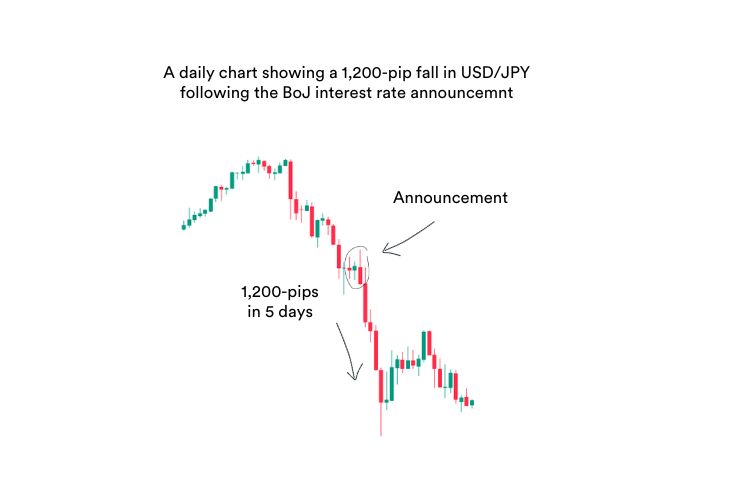
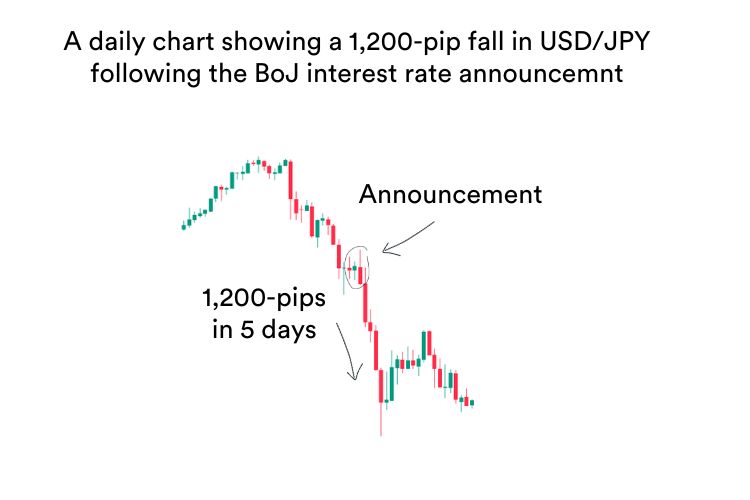
For example, look how the US dollar plunged compared to the Japanese yen following a Bank of Japan interest rate announcement in July 2024:  

A trading chart showing the fall in the USDJPY after a Bank of Japan interest rate announcement

Avoid trading during weekends and holidays  

Liquidity often dries up during the weekends and holidays, which can lead to erratic price movements.  

It’s generally advisable to close positions before the weekend to avoid unexpected price bounces when the market reopens on a Monday morning.  

To reduce risk, many retail traders avoid trading on Monday mornings and late Friday afternoons, to avoid the worst of unpredictable price volatility.  

Currency pairs and risk management: what you trade 

Not all currency pairs present the same risk in terms of volatility, liquidity, and spread costs. Here’s what you can do to minimise risk in your choice of currency pairs: 

Stick to major pairs 

Major currency pairs like EUR/USD, GBP/USD, and USD/JPY are typically more liquid and have tighter spreads, reducing your trading costs, and also your risk of slippage. 

By sticking to the major pairs, you maximise your chances of getting in and out of your trade at your preferred price, because there is plenty of liquidity in the market. 

Trading less-liquid pairs exposes you to the risk of slippage, which means you may not be able to get in and out of a trade at the price you require.  

What is the risk of slippage? 

Imagine you want to buy a less-liquid currency pair, such as the Mexican Peso (MXN) against the Japanese Yen (JPY), with an intent to enter the trade at 10.00 JPY. You place a market order expecting to buy at this price. 

However, due to the low liquidity of this currency pair, there aren’t enough sellers at 10.00 JPY to fill your entire order. The next available sellers are offering 10.05 JPY. As a result, your trade is executed (filled) at 10.05 JPY, instead of your intended price of 10.00 JPY. 

This difference of 0.05 JPY (between your expected price, and the actual execution price) is known as slippage. 

It happens because there aren’t so many buy/sell orders in the market, leading to a greater chance of a price gap between what you see, and what you get, especially when you trade less liquid currency pairs. 

In a volatile or fast-moving market, slippage can become more pronounced, making it difficult to enter or exit trades at the desired price. 

Beware of exotic pairs 

Exotic pairs, such as USD/TRY (US Dollar/Turkish Lira), can have much wider spreads and far lower liquidity, making them more volatile and far riskier to trade. 

Therefore, as part of your risk management strategy, to reduce your trading risk and avoid slippage and higher spreads, stick to trading the major currency pairs. 

Understand the correlation between pairs 

Some currency pairs are positively or negatively correlated.  

If two currency pairs are correlated, their prices tend to move in a certain direction relative to each other—either in the same direction, in opposite directions, or with no predictable pattern. 

It’s important to understand why pairs correlations matter before you start trading.  

Trading multiple pairs that are highly correlated can increase your risk exposure.  

For example, here is a chart displaying EUR/USD, GBP/USD, and AUD/USD. You can see all three pairs move together, meaning they are positively correlated.   

A trading chart line diagram showing positive correlation between three different forex pairs

Positively correlated pairs 

These pairs tend to move in the same direction: 

  • EUR/USD and GBP/USD: Both are major currency pairs and often move together due to their shared reliance on the US dollar 
  • AUD/USD and NZD/USD: Both are commodity currency pairs, and their prices are influenced by similar factors like commodity prices and risk sentiment 
  • USD/CAD and USD/CHF: Both have an inverse relationship with the US dollar, meaning they tend to move in the opposite direction to the movements of the dollar index 

Negatively correlated pairs 

These pairs move in opposite directions: 

  • USD/JPY and EUR/JPY: USD/JPY is negatively correlated with EUR/JPY due to the contrasting monetary policies of the US Federal Reserve and the European Central Bank 
  • AUD/USD and USD/JPY: These pairs are negatively correlated, as the Australian dollar is considered a risk currency, while the Japanese yen is a safe-haven currency 

Weak or no correlation 

Some pairs move independently of each other: 

  • GBP/USD and USD/CHF: These pairs may exhibit weak or no correlation due to distinct economic factors and geopolitical influences.  
  • GBP/USD and USD/CHF: While their correlation might be weak at times, it’s not necessarily always absent. 

They can exhibit some degree of positive correlation, especially during periods of global risk aversion, as both the British pound and Swiss franc can act as safe-haven currencies to an extent. 

As part of your risk management strategy, make sure that you understand the correlation between currency pairs. 

Either only trade one pair at a time (which is what we recommend for beginner traders), or make sure you thoroughly understand the concept of correlation if you do trade multiple pairs at one time.  

To reduce your risk, ensure you diversify your trading by selecting pairs that don’t move in the same direction in response to the same market news. 

Use currency-specific analysis to determine your trade risk 

Each currency is influenced by different economic factors and news events. 

By getting to know which news events and economic factors affect which currencies, and in which direction, you can minimise your overall risk. 

For example, the Australian Dollar (AUD) is heavily influenced by commodity prices, particularly iron ore, while the Japanese Yen (JPY) often acts as a safe haven in times of global uncertainty. 

You can learn more here about forex trading and how it works.   

How to decide when to enter a trade 

Graphic saying plan

Develop a comprehensive trading plan  

Entering a trade at the right time is critical to managing your risk.  

Make sure your trading plan is very clear about your entry signals, and don’t place a trade until all the entry criteria in your trading plan have been met. 

Here at MarketMates we believe in using a rules-based trading system that defines precise rules for all aspects of your trading. 

This means that before you enter any trade, you will have: 

  • decided which trading strategy to use depending on the market type 
  • stalked the perfect trading conditions according to your trade entry rules 
  • completed a checklist to ensure that all criteria for a trade are present and correct 
  • calculated your position size based on your risk appetite, the size of your trading account, and the distance between your trade entry and stop-loss 
  • decided on exactly when you will exit the trade, based on a staged exit strategy 
Trading checklist

As part of The Advanced Forex Course for Smart Traders 2.0, we have developed a range of resources to assist you in managing risk.  

These include a FREE: 

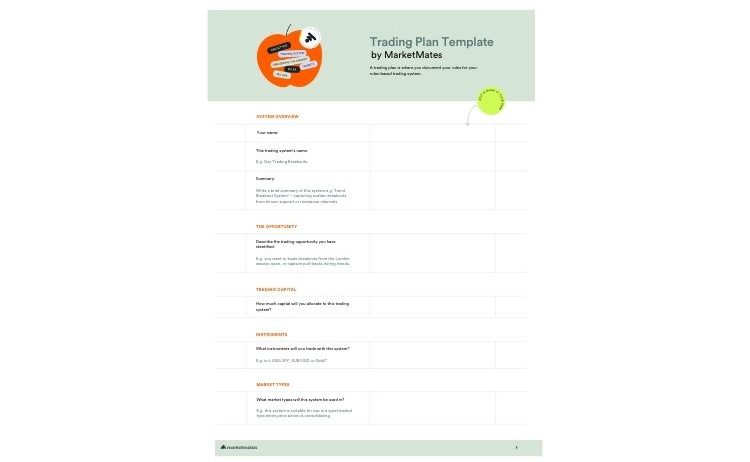
  • Trading Plan template 
  • Traders’ Compass template 
  • Contingency Plan template 
  • Trade Recording template 
  • Trading Checklist 

Here you can access all of the MarketMates’ FREE resources.  

MarketMates Trading Plan template

Combine both technical and fundamental analysis 

Use technical indicators like moving averages, Bollinger Bands, the Supertrend indicator and RSI to identify entry points.  

Combine this with fundamental analysis, such as economic data releases, to confirm the timing of your trade entries and exits. 

By using a combination of both technical and fundamental analysis, you can reduce the overall risk of your trading decisions.  

Wait for confirmation 

Don’t rush into your trades, or rely on one indicator or candlestick signal alone.  

Wait for a confirmation signal, such as a candlestick closing above or below a key support/resistance level or position on the Bollinger Bands. 

Refer to multiple time frames on your trading charts 

Don’t stick to one chart time frame when planning your trade entry, as this can give you a distorted view of price action. 

Relying solely on one lower timeframe chart, such as a five-minute or 15-minute chart, can lead to a distorted or incomplete understanding of the current market direction.  

This is because lower timeframe charts only capture short-term price movements, which can be highly volatile and prone to ‘noise.’ 

These charts might show a trend that appears strong, but without the context of higher timeframes (e.g., one-hour, four-hour, daily), you may miss the broader trend direction or key support/resistance levels. 

Therefore, to reduce your overall risk when trading, make sure you consult different chart timeframes to confirm your trade entry direction. 

For example, use a higher timeframe (such as a weekly chart) to identify the overall trend, and a lower timeframe (such as hourly, 15-minute or five-minute) for more precise trade entry points. 

Avoid overtrading 

Stick to your trading plan, and never enter trades out of boredom, or a desire to recover losses.  

Overtrading is a frequent mistake that beginner traders make, and will often lead to unnecessary risk.  

By trusting your trading plan, and sticking to the set number of trades in your plan, you can reduce the risk of overtrading or emotional trading.  

Use position-sizing to minimise risk 

Proper position sizing is essential to protect your capital and minimise risk. 

There are many ways to determine your position size, including:  

  • Risk a fixed percentage of your capital: Determine a fixed percentage of your trading capital to risk on each trade, typically between 0.5-2%. This approach ensures that no single trade can significantly damage your account. 
  • Adjust your position size based on volatility: Use indicators like the Average True Range (ATR) to adjust your position size according to market volatility. In more volatile markets, reduce your position size to account for larger price swings. 

You can read here all about achieving your goals through position sizing.   

Use leverage carefully 

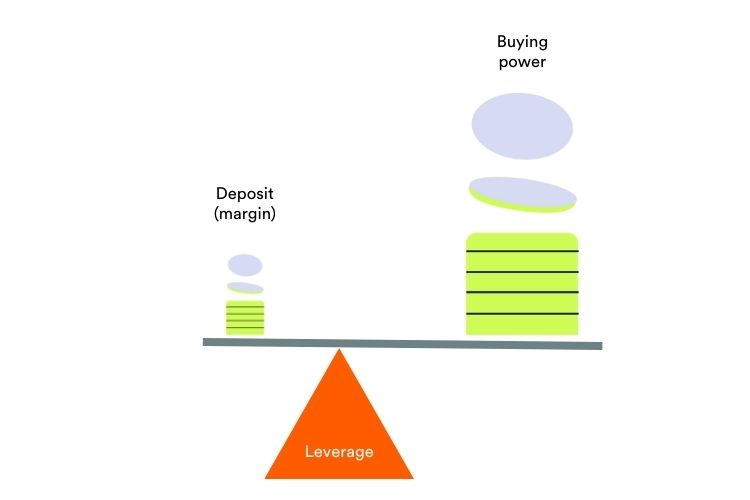
A diagram showing margin and buying power on a scale with leverage as the fulcrum

Leverage amplifies both your profits and losses.  

Be very cautious with the amount of leverage you use, and understand that higher leverage increases overall risk. 

Remember that just because you have access to a certain amount of leverage, doesn’t mean you have to use all the leverage available to you.  

Risk management involves decreasing all aspects of potential risk. 

This includes reducing the amount of leverage you use, or using leverage carefully in conjunction with position size, to ensure any one position you open doesn’t have the potential to adversely affect your entire trading account.  

Rules for exiting a trade to reduce risk 

Having a well-defined exit strategy is just as important as having a good entry strategy. 

Sam Eder is fond of the phrase: ‘Use simple entries and complex exits.’  

What he means by this is that rules for entering a trade should be simple, and easy to implement, whereas your trade exit rules should be more complex and nuanced.  

Here are ways that you can manage your risk when setting up rules to exit a trade:  

  • Set stop-loss orders: Always place a stop-loss order to limit potential losses. Set it at a level that validates your trade idea, not just at a random number of pips. 
  • Use trailing stops: A trailing stop-loss order allows you to lock in profits as the market moves in your favour, automatically adjusting the stop-loss level as the price increases. 
  • Establish take-profit levels: Set realistic take-profit levels based on key support and resistance zones, ensuring a favourable risk-to-reward ratio. 
  • Regularly review and adjust: Continuously monitor your exit strategy and adjust it according to market conditions. For example, if volatility increases, you might want to tighten your stop-loss. 

How to respond when things go wrong 

Trading psychology plays a crucial role in how you behave when things go wrong with your forex trading. 

Having the emotional discipline to stay calm if a trade suddenly goes against you is vital to avoid the risk of emotional decision-making. 

Practicing and mentally rehearsing what you will do if things go wrong is a powerful way of preparing for the inevitable.  

In my experience, the riskiest time for all novice traders is just after a trade goes in an unexpected direction, as this is the time when panic and emotional decision-making can take over. 

In these circumstances it is vital to:  

  • Stick to your trading plan: Avoid making emotional decisions, particularly after one loss, by sticking to your trading plan. Follow your trading plan carefully, and resist the urge to chase losses or increase your position size to recover quickly. 
  • Accept your losses: Understand that losses are a welded-on part of trading. You can’t trade without accepting that losses are part of the cost of doing business. Focus on your long-term success, rather than short-term drawdowns to your account. 
  • Keep a trading journal: Document all your trades carefully, including your thought process and emotions. Reviewing your journal can help you identify patterns and improve your decision-making over time. 
  • Don’t hesitate to walk away or take a break: If you experience a series of losses, consider taking a break from trading to clear your mind and reassess your trading strategy. Remember that the financial markets will always be there, so you lose nothing by taking a break to calm down if things get tough. 

Managing external risks

Graphic saying System Error

Managing unforeseen events should be part of your overall risk management strategy.

An IT expert once told me:  

“There are two sorts of traders; those who HAVE experienced a hard-drive crash, and those who WILL experience a hard-drive crash.”  

External risk factors like disk crashes, power failures, or technology malfunctions can disrupt your trading in unforeseen ways. 

However, you can plan for such events in advance, so that you know exactly what to do if you are suddenly faced with an unexpected risk. 

Once when I was day-trading full-time, I suddenly lost all internet connection, and I had several large trades in place at the time. 

I immediately turned to my backup laptop computer, which I kept plugged in on one side of my main trading desk.  

However, I soon realised it wasn’t my desktop computer at fault; there was no internet signal coming into my house. 

I found out an underground internet connection to my area had been accidentally severed by road workers, so there would be no internet to my house for several hours. 

However, due to my backup planning, I was able to pick up my laptop and drive to the nearest public library, where I was able to work using their internet connection.  

My advance planning for such an emergency saved me a lot of last-minute panic, as I knew exactly what to do in such an emergency, and had practiced my back-up trading plan.   

Ways to prepare for unforeseen events to minimise your risk include:  

  • Monitor the news: Stay informed about what’s going on in the world. Keep an eye on your national and regional news too, in case of local energy outages or network failures in your area.  
  • Have backup systems: Ensure you always have a reliable backup phone, laptop, tablet or desktop computer in case your main trading machine fails 
  • Ensure you have the relevant apps installed on your backup machine, and keep those apps updated and current 
  • Keep a list of your passwords and logon IDs handy in case you suddenly need to use your backup system 
  • Organise cloud backup for your vital trading documents, and access to a mobile trading app which does not rely on the internet, in case of internet technology failure  
  • Plan in advance what you will do if you suddenly experience the dreaded ‘black screen’ or broken Apple symbol on your usual trading device 
  • Always use stop-loss orders. Protect your trades with stop-loss orders. This will at least minimise your loss if your trade goes against you, and you’re unable to monitor your trades due to technology failure 

Personal risks 

Health and well-being 

Your physical and mental health can significantly affect your trading performance. 

  • Prioritise your health: Regular exercise, a balanced diet, and adequate sleep are essential for maintaining the focus and energy needed for successful trading
  • Maintain a healthy work-life balance: Avoid letting trading consume your entire life. Make time for your family, other hobbies, and relaxation to maintain a healthy work-life balance 
  • Don’t hesitate to take a break if your trading begins to overtake other important aspects of your life, such as your family or personal relationships 
  • Learn to manage stress: Trading can be stressful, especially during periods of high market volatility. Develop stress management techniques, such as meditation, to stay calm and focused. Get to know how your body tells you it is feeling stressed – this is different for each person 
  • Plan for unexpected life events: Unexpected life events, such as illness or family emergencies, can take your focus away from trading. Have a plan in place to manage your trading account or step away from the market during such times in your life. 

Final thoughts 

Successful risk management in forex trading involves planning for every eventuality that can threaten your trading success. 

It doesn’t begin or end with decisions about when, where and what to trade, but encompasses many other risks.  

In this article I’ve given you a birds-eye view of the many aspects of risk management that you should consider and plan for, way before you even start to trade.  

I would strongly encourage you to write a Contingency Plan in addition to your standard Trading Plan prior to starting to trade. 

A solid forex trading risk management plan will help you stick to your trading strategy and make rational decisions, reducing the influence of emotion on your trading outcomes. 

This way you’ll be prepared for the unexpected, and will be able to handle emergencies like a pro.  

Remember – failing to plan is the equivalent of planning to fail.  

Therefore, if you want to avoid becoming a sad trading statistic, plan for all eventualities, and be clear what you will do when an unexpected event affects your trading routine. 

It WILL happen to you one day, so be prepared for when it does.   

If you like this article then sign-up for our newsletter or join over 42,000 traders and get The Advanced Forex Course for Smart Traders 2.0. It’s 100% free.

Sources

Marketmates uses only high-quality sources, including peer-reviewed studies, to support the facts within our articles. Read our editorial guidelines to learn more about how we fact-check and keep our content accurate, reliable, and trustworthy.

  1. Triennial Central Bank Survey of the Bank for International Settlements (BIS) – https://www.bis.org/statistics/rpfx22.htm
  2. Bank of England Semi-annual Report on Foreign Exchange Turnover – April 2024  https://www.bankofengland.co.uk/markets/london-foreign-exchange-joint-standing-committee/results-of-the-semi-annual-fx-turnover-survey-april-2024
  3. European Securities and Markets Authority (ESMA) – Press Release 27/03/2018  https://www.esma.europa.eu/press-news/esma-news/esma-agrees-prohibit-binary-options-and-restrict-cfds-protect-retail-investors

Secure Broker-backed Funding for Traders.

Try simple, flexible ‘balance-based’ challenges. 

Picture of MarketMates Editorial Team

MarketMates Editorial Team

The MarketMates editorial team is led by ceo and co-founder Sam Eder, and consists of internal and external trading experts.
Picture of MarketMates Editorial Team

MarketMates Editorial Team

The MarketMates editorial team is led by ceo and co-founder Sam Eder, and consists of internal and external trading experts.

5 ChatGPT Prompts to Help You Pass Any Prop Firm Challenge

Build a rules-based plan in minutes using AI.

The Advanced Forex Course

for Smart Traders 2.0

Join over 42,000 traders and get FREE access to 17+ lessons and five hours of on-demand video based on the famous ‘Market Wizards’.

Keep Learning

Bank Desk Weekly
Sam Eder

Bank Desk FX Weekly 24 August 26

The US dollar remains under pressure, but this week could decide whether the weakness has further to run. PCE inflation and Fed Chair Kevin Warsh at Jackson Hole are the

Bank Desk Weekly
Sam Eder

Bank Desk FX Weekly 17 August 26

The US dollar starts the week under pressure as weaker jobs, inflation and retail data reduce expectations for another Fed rate increase.

Bank Desk Weekly
Sam Eder

Bank Desk FX Weekly 10 August 26

Weak US jobs have pushed the dollar lower and reduced expectations for further Fed rate hikes. Banks remain divided on what comes next, with US CPI, the RBA decision and

marketmates

Join over 42,000 Traders. 100% FREE.

The Advanced Forex Course
for Smart Traders